
Taste
We decide what to build, what to leave out, and how it should feel, before we write a line of code. Most AI projects fail on that decision, not on the model.
AI consulting · Product design · Engineering
Tradewind is an AI consulting firm for established businesses. We find where AI earns its place, then design and build software your people use and your firm owns.
Case studyRedline, our own AI product See it workSee it work
Requests from email, your ERP and your CRM are read and drafted before anyone opens them. What needs judgment comes to a person, with the reasoning shown and the next step ready.
Founded and led by Dharam Sarvaiya, Founder & Managing Partner.
Why Tradewind
Models are now a commodity. What separates software people rely on from a pilot that stalls is judgment: what to build, how it fits the business, and where a person stays in charge.
We decide what to build, what to leave out, and how it should feel, before we write a line of code. Most AI projects fail on that decision, not on the model.
Fifteen years of finance, procurement and ERP delivery. We build around the systems you already run, and we replace one only when it is the thing in the way.
AI proposes and your people decide. Uncertain work goes to a person, with the reasoning shown, so a mistake is caught before it costs you.
The Tradewind difference
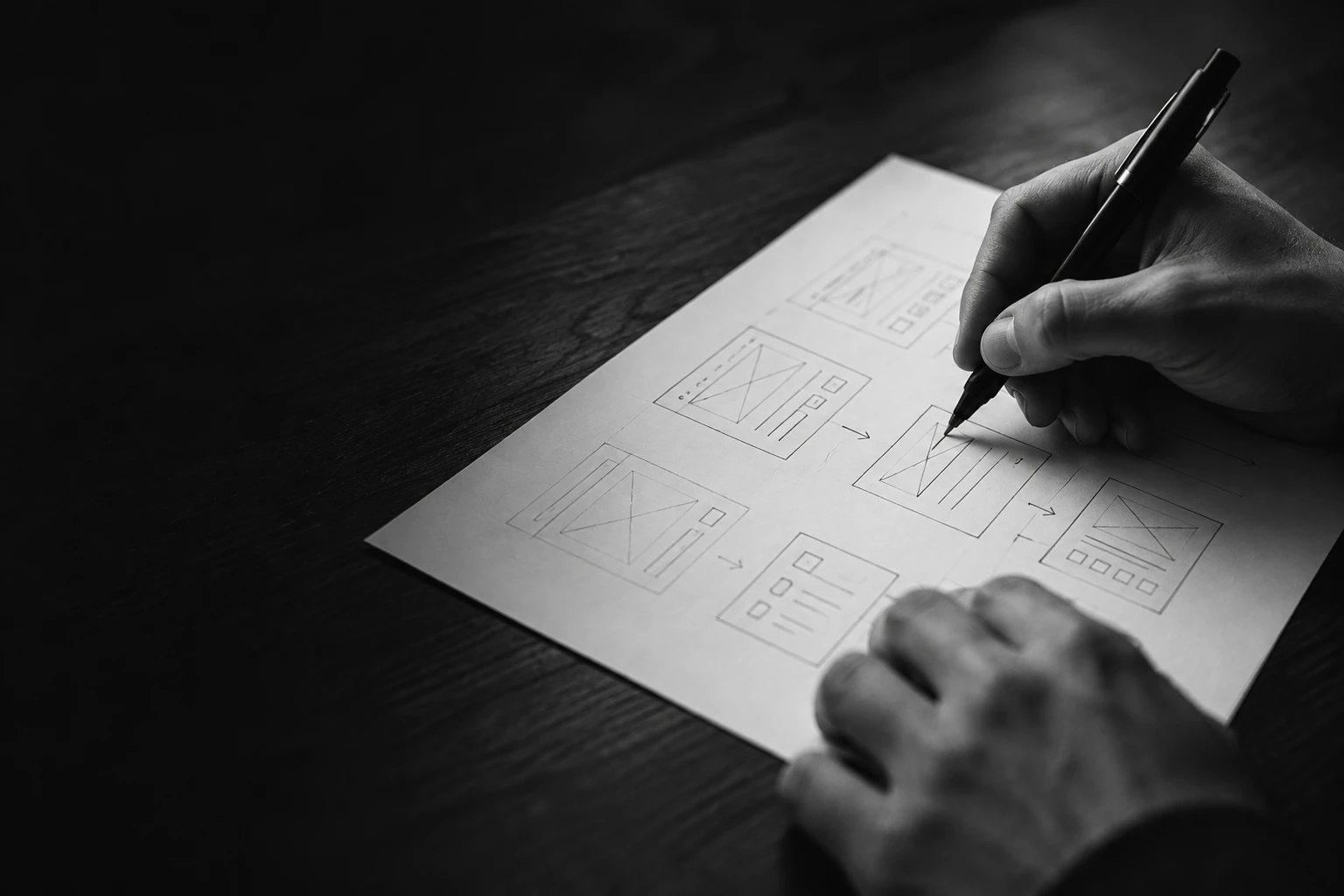
Taste is a hundred small decisions about what to build and what to leave out. Here are four we make on every project.
Instead ofA chatbot on top of a broken process
We buildThe process, redesigned around what AI can now do
Instead ofA dashboard of everything
We buildThe handful of things a person needs today
Instead ofA confident guess
We buildUncertain work routed to a person, reasoning shown
Instead ofA demo that impresses the room
We buildA tool your people choose to use
What we build
Each one designed around the people who use it, connected to the business around it, and owned by you.
Your day, in focus
Today
Five things need you.
Leadership
1 item flagged to you
Software shaped around one firm’s work, so the day starts with what needs judgment.
Case study: A small firm, run from one appFollow-ups
3 items need a nudge this week
Item 0142
ApprovedNext step
Draft invoice ready for review.
Requests, approvals and records connected, with each next step prepared for the person responsible.
Case study: Five spreadsheets, one systemFinding 03 · Sheet M-201
Duct size does not match the schedule.
“24×12 SA” on plan · “20×12” in schedule
Your expertise as a product. We designed, built and run our own: Redline, AI drawing review.
Case study: Redline, our own productOur approach
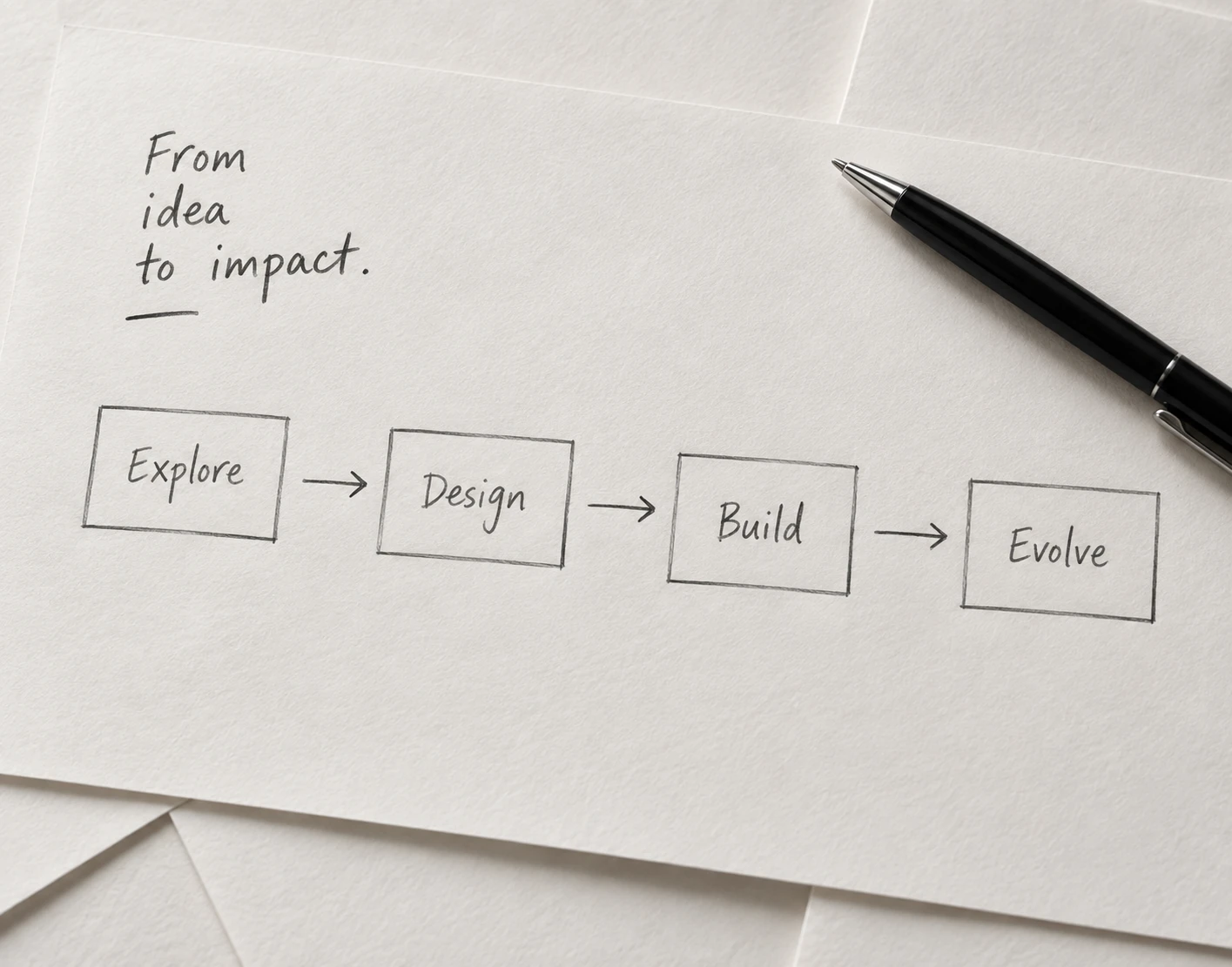
Work with us for one stage or all four. Each is priced in writing before it starts, and you keep what it produced.
01
We map one piece of work with the people who do it and agree what good looks like.
A focused opportunity, or a clear no
02
We design and prototype the experience so your team can see it, test it and shape it.
A tested experience and a build plan
03
We engineer, integrate and launch in phases, so something works early.
A working system your people use
04
We support, monitor and refine what we built, and decide with you what comes next.
A system that gets better with use
In practice
Six industries, one pattern: the request arrives, the details come together, your team makes the call, and the work moves forward.
Manufacturing & distribution
Quotes assembled from pricing and availability, with uncertain lines brought to a person.
See it in practiceProfessional services
The right work in front of the right people when a client changes the brief.
See it in practiceFinance
Exceptions explained from the order, the receipt and the supplier record.
See it in practiceTechnology
Handoffs that keep the whole story, from support to the account team.
See it in practiceReal estate
Transaction files checked against the required documents before closing.
See it in practiceMarketing
Every asset checked against approved claims and channel rules before launch.
See it in practiceLet’s talk
We work with established businesses throughout the U.S. Start with one piece of work that matters. We will tell you whether it is worth building, and what the first stage would take.